

Grains are celebrated as the foundation of a healthy diet — wholemeal bread, oats, rice and quinoa. But under the nutrient-first lens, they behave less like nourishment and more like sugar. Here’s why grains, whether refined or whole, may be draining more than they give.
Grains are everywhere. From school food pyramids to cereal commercials and health blogs, we’ve been taught that grains, especially whole ones, form the bedrock of a healthy diet. Brown bread, oats, rice, quinoa - these foods are praised for their fibre, promoted for supposed heart health benefits.
“Starchy foods – such as potatoes, bread, rice, pasta, and cereals – should make up just over a third of the food you eat, as shown by the Eatwell Guide. Where you can, choose wholegrain varieties, and eat potatoes with their skin on for more fibre.”
— NHS, Eatwell Guide
But from a nutrient-first perspective, it’s worth asking:
Are grains truly nourishing, or are they simply less bad than sugar?
In my previous article, we explored table sugar, arguably the simplest and quickest-acting empty calorie, and followed how it affects the body from the first sweet taste on the tongue to the metabolic toll it takes on the liver, brain and hormonal systems.
Now we take one step further along the spectrum of nutrient-poor foods and turn our attention to something more complex: grains.
Key Question
We’ll look at each type of grain through one clear lens:
Does this food nourish your body after it’s been metabolised or does it take more than it gives?
This isn’t about what’s written on the label. It’s about what remains after digestion, absorption and energy production → the net result. Does the food leave you in a state of nutrient gain or nutrient debt?
In this series, we’ll explore:
What grains are: from refined to whole to pseudograins
How they are digested and metabolised, and what nutrients they provide (or lack)
The role of refinement, processing, fortification and antinutrients
And most importantly, whether they provide real nourishment or take more than they give
What Are Grains?
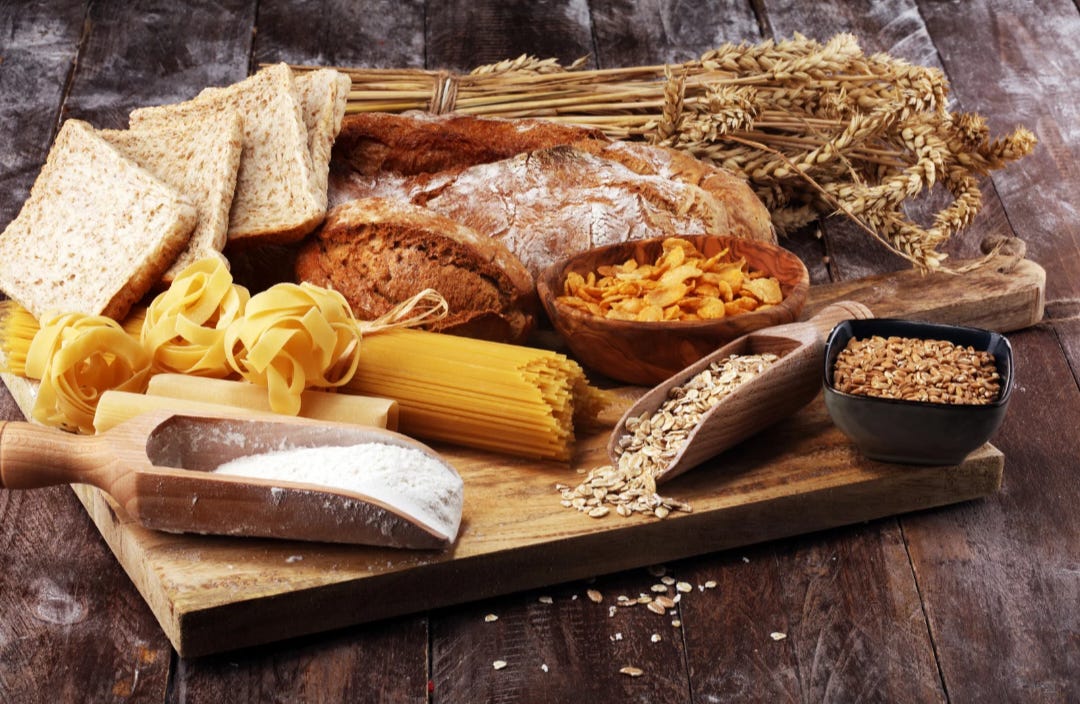
Grains are the seeds of grasses, belonging to the Poaceae family. They’ve been cultivated for thousands of years, providing a reliable source of energy through their high starch content. When we talk about grains in the diet, we’re usually referring to familiar staples like wheat, rice, corn, oats and barley.
Let’s explore three broad categories often used when discussing grains in the diet: refined, whole and grain-like alternatives.
Refined Grains
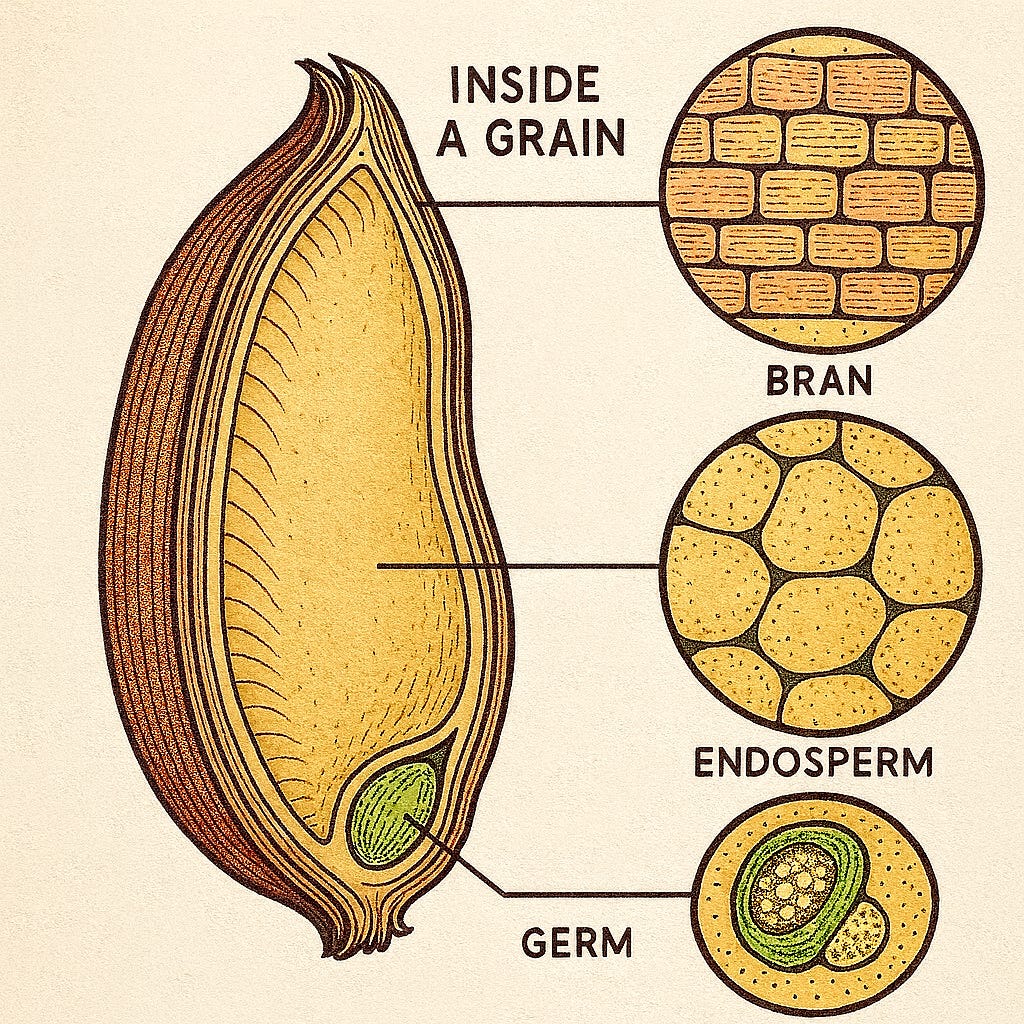
Refined grains have had the bran and germ removed, leaving primarily the starchy endosperm. This process strips away most of the fibre, protein, naturally occurring nutrients like B-vitamins, iron, magnesium and zinc. White flour, white rice, pasta and many commercial breads and cereals fall into this category.
To keep things clear, we’ll focus here on their unfortified form. The processes of enrichment and fortification, and their actual impact, will be explored later.
Whole Grains
Whole grains retain all three parts of the seed: bran, germ and endosperm. This makes them higher in fibre and certain micronutrients compared to their refined counterparts. Wholemeal bread, brown rice, oats and barley are commonly cited examples.
Despite their “whole” label, whole grains are still largely made of starch and are often processed in ways (like rolling, puffing or grinding into flour) that make them break down in the body nearly as fast as refined grains. Intact kernels (like steel-cut oats or barley) digest more slowly, but the end product is still glucose.
Nutritionally, they are “less bad” than refined grains but not necessarily nutrient-dense.
Pseudograins
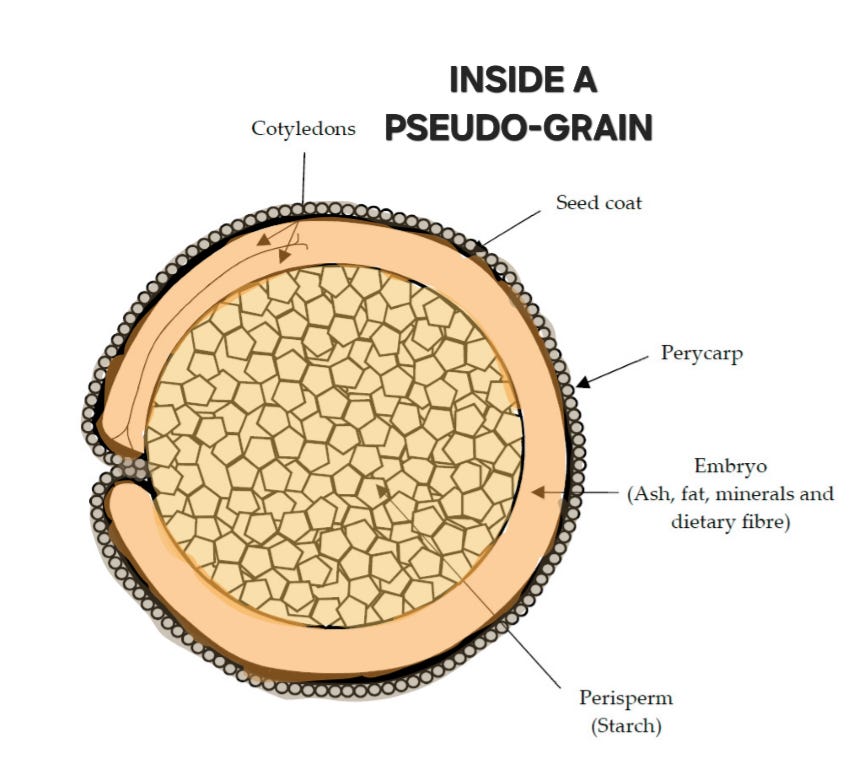
Pseudograins like quinoa, buckwheat, amaranth and millet aren’t true cereals, they come from non-grass plants but are used in similar ways. They’re often praised for being gluten-free and richer in certain nutrients, such as magnesium, iron or complete proteins (in the case of quinoa and buckwheat).
However, they still come with a high starch content and often contain antinutrients that reduce the absorption of key minerals. Their “superfood” status is often more marketing than metabolic magic.
And What about Cereals?
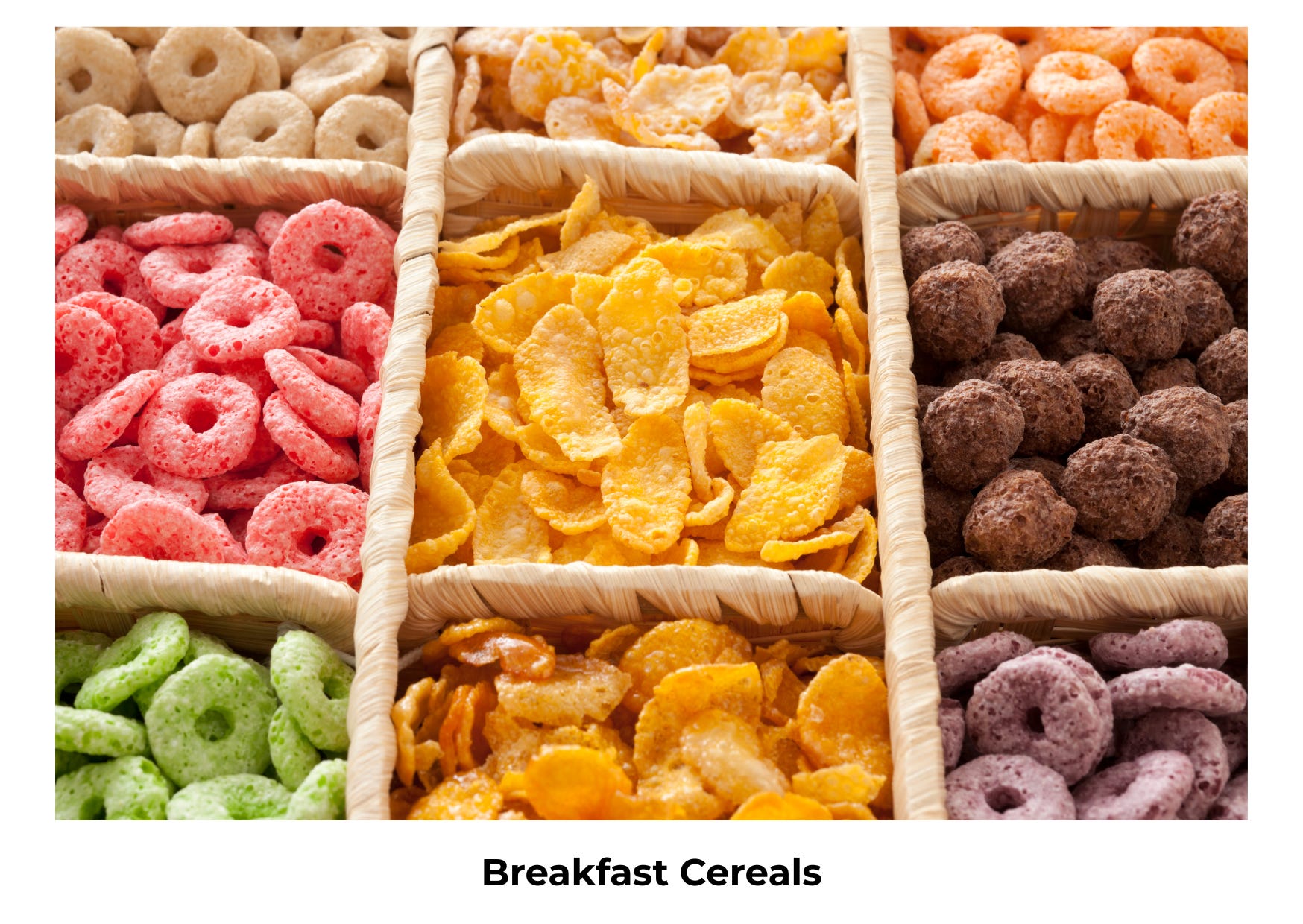
Breakfast cereals including those marketed as “whole grain” often begin as refined grains or heavily processed whole grains. They’re typically ground, extruded, shaped, sweetened and fortified to meet nutrient guidelines. On the label they may look nutritious, but in the body many cereals behave more like fast-digesting sugar, spiking blood glucose and offering little real nourishment.
How Grains Are Digested and Metabolised
Why grains act like the glucose half of sugar: fast energy with little nourishment
We often think of sugar and grains as very different foods. Sugar is the villain, everyone agrees too much is harmful. Grains, on the other hand, wear a “healthy” halo, especially when labelled whole grain. But when we look at what happens in the body, the gap between them isn’t as wide as we’ve been led to believe.
In fact, metabolically, grains behave a lot like sugar. Not identical, grains don’t deliver fructose in the way table sugar does, but their dominant effect is clear: they flood the body with glucose.
Let’s follow the journey step by step.
Step 1. Starch Breakdown Begins in the Mouth
Grains are built on starch: long chains of glucose molecules linked together. The moment you start chewing bread, rice, or pasta, enzymes in your saliva (amylase) begin cutting those chains into smaller units.
Step 2. The Stomach: A Pause in Digestion
Once swallowed, food enters the stomach, where the acidic environment halts the work of salivary amylase. Starch digestion essentially pauses here. Unlike protein (which begins to break down under pepsin) or fat (which mixes with bile acids later), carbohydrates wait.
The stomach churns the food into chyme but contributes almost nothing to breaking down grains. In other words, starch largely bypasses the digestive work of the body’s central organ, only resuming its digestion later in the small intestine.
Step 3. Rapid Conversion to Glucose in the Small Intestine
When chyme enters the small intestine, pancreatic amylase picks up where salivary enzymes left off, breaking starch chains down fully into single glucose molecules. These are absorbed quickly into the bloodstream through specialised transporters, producing a rapid rise in blood sugar.
Refined grains contain about 75–85% starch in their composition. With little protein or micronutrients left, they behave almost like pure glucose once digested.
Where sugar (sucrose) delivers both glucose and fructose, grains are almost entirely glucose. That means every slice of bread or bowl of rice behaves like the glucose half of sugar: ready to spike blood sugar levels and demand an insulin response.
Step 4. The Insulin Response and Nutrient Cost
As glucose floods the blood, the pancreas releases insulin. Insulin’s job is to shuttle glucose into cells, where it can be used for energy or stored for later. Some goes into muscle and liver as glycogen, but when those stores are full, the excess is converted into fat.
This process isn’t “free.” It requires specific nutrients as cofactors, especially:
Magnesium for insulin receptor activity and enzyme function.
B-vitamins:
B1 (thiamine)
B2 (riboflavin)
B3 (niacin)
B5 (pantothenic acid)
B6 (pyridoxine)
These vitamins act as coenzymes in the pathways that convert glucose into usable energy. If they are insufficient, the body struggles to process glucose efficiently leading to fatigue, unstable blood sugar, and metabolic stress.
And just as with sugar, high blood glucose may even interfere with vitamin C uptake in cells, since glucose and oxidised vitamin C compete for the same transporters. (For a fuller breakdown of that mechanism, see The Sweet Deception.)
Whole Grains: Slower but Still Starch-Heavy
Whole grains contain around 60–70% starch, plus fibre, some protein, and small amounts of micronutrients. If eaten intact (like steel-cut oats or barley kernels), digestion is slower. But once they are ground into flour, rolled, puffed, or extruded, the starch becomes just as accessible as in refined grains.
The blood sugar rise may be slower but the destination is the same: a large dose of glucose, demanding insulin and nutrient cofactors that the grain itself doesn’t supply in proportion to the glucose load.
Pseudograins: Extras That Don’t Change the Core
Quinoa, buckwheat, amaranth, and millet are often promoted as “superfoods.” They do offer some extras:
Quinoa and buckwheat provide all essential amino acids.
Some are higher in minerals such as magnesium and iron.
But their composition still includes about 55–70% starch, meaning most of their calories break down into glucose. The extras don’t change the fact that most of the energy still arrives as glucose, creating the same metabolic demand.
Breakfast Cereals: the Extreme Case
Cereals deserve their own category because of how heavily they are processed. Whether labelled “whole grain” or not, most cereals begin as refined grains or heavily milled whole grains. They are then extruded, flaked, puffed, shaped, and often sweetened.
This processing breaks down the natural structure of the grain, leaving starch that is digested at lightning speed. Add sugar on top and you get both glucose and fructose together — the metabolic double hit of bread plus soda. The label may highlight fibre or fortification, but inside the body, cereals act like fast sugar.
The Bottom Line
Sugar is a mix of glucose and fructose. Grains are almost pure glucose. Both create a rapid rise in blood sugar and a demand for insulin. Both require cofactors like magnesium and B-vitamins that they do not provide in meaningful amounts.
Refined grains, whole grains, pseudograins, cereals: the speed may vary slightly, but the end result is the same: a glucose surge followed by an insulin surge, with little real nourishment in return.
Conclusion: Grains as Glucose Delivery Systems
When stripped back to their essence, grains are not the nourishing staples we have been led to believe. Whether refined, whole, or marketed as “superfood” pseudograins, they are predominantly starch: 55 to 85 % of their composition, and behave in the body like the glucose half of sugar.
They raise blood sugar, trigger insulin, and demand nutrient cofactors such as magnesium and B-vitamins without supplying enough in return. In some cases, high glucose levels can even interfere with vitamin C uptake in cells. The result is a food that often consumes more from the body than it gives back.
This is why grains belong among nutrient-poor foods. They may arrive in different guises: white bread, brown rice, quinoa salad, or fortified breakfast cereal, but the underlying story remains the same.
In this first article on grains, we focused only on how their carbohydrate metabolism makes them act more like sugar than nourishment. Next, we’ll look at what they actually provide: their protein quality, vitamins, and minerals.
Do they offer enough to justify their place as a dietary staple or do they continue the pattern of taking more than they give?